
The Los Angeles County Arrest Log
For a multi-day view of recent arrests, start with the LASD Booking Log. Pick a station, then set From and To dates inside the rolling seven-day window. The tool covers the past seven calendar days only. It is the same official endpoint behind a quick one-day lookup, just configured for a longer stretch of booking activity.
Treat it as a county-system blotter, nothing more. Los Angeles city, Long Beach, and federal custody systems hold arrest records that never appear here. There is no permanent archive behind it. LASD posts no fixed daily release time either.
How to Read the Los Angeles County Blotter
Start from the likely arrest date and agency. Work outward from there. A countywide query can bury which station actually handled the booking, so narrow the station choice when results feel crowded. Repeat with each likely station until the arrest surfaces.
- Open the LASD Booking Log and note the current seven-day boundary.
- Select the station tied to the arrest or booking.
- Enter the first and last date, then set the time controls for the full desired span.
- Complete reCAPTCHA and record when the result was checked.
- Compare a likely entry with the live IIC custody result and later court record.
One very recent interval calls for a different tool. Use Arrested Today for the past few hours. The multi-day arrest report fits better when a search spans several shifts or a weekend. It is weaker for live custody questions. The official Booking Log form shows the station and date controls behind this rolling blotter.
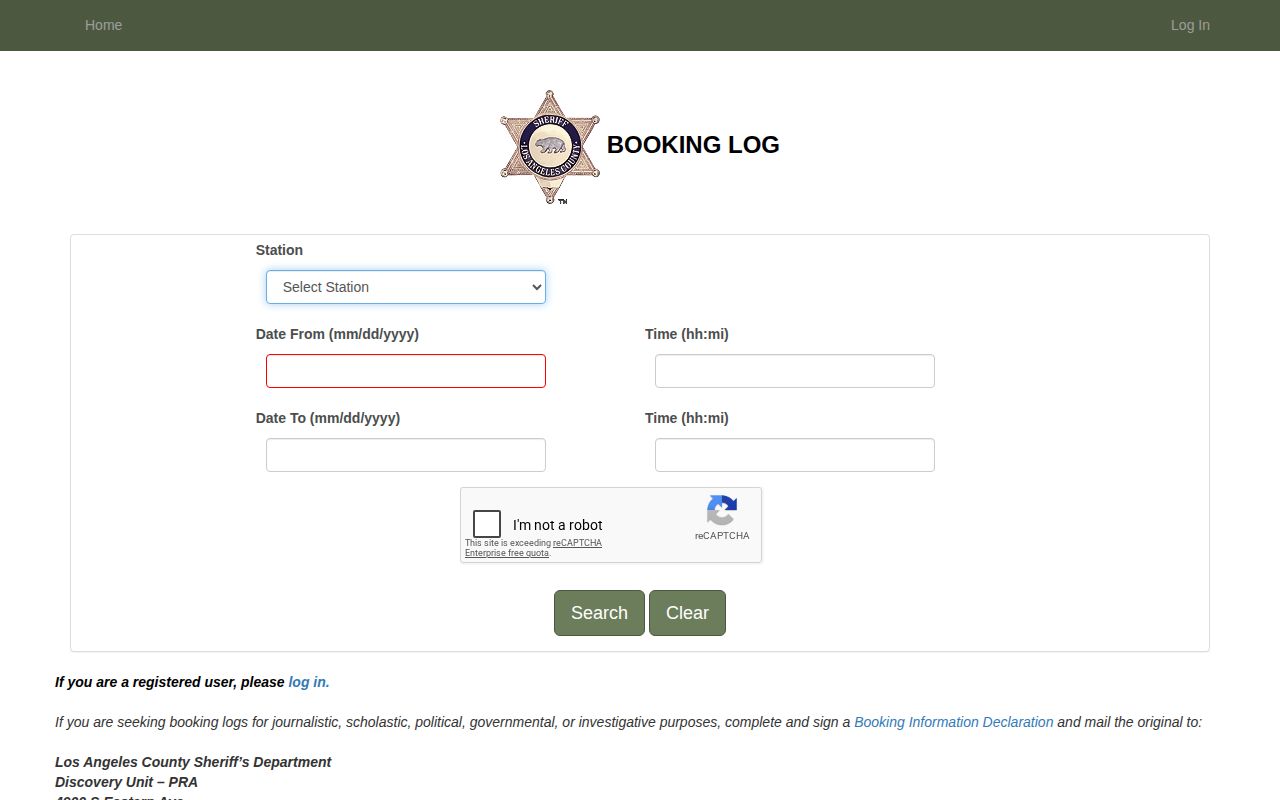
This is a records tool at heart. The form queries booking entries by station and date. Results arrive as text, not images. That makes sense for a working blotter meant for lookups.
What an Arrest-Log Entry Shows
The form sets the outer limits. Station, date, and time frame each query. The LASD booking record behind an entry can hold far more detail than the public log summary shows. Not every field makes it online.
| Field | How to read it |
|---|---|
| Station | The LASD station used to narrow the query. |
| Date range | A user-selected span no older than the interface permits. |
| Booking number | A county booking-event identifier, not a court case number. |
| Arrest and booking time | Different stages that may show processing delay. |
| Charge | An charge or commitment basis at intake. |
| Bail | A value at that point, subject to later change. |
| Photo | May exist in the agency file, but public display is not promised by the log. |
LASD's own booking and property form digs deeper. It tracks agency, identity, fingerprints, and the arrest location. Warrant, commitment, and property fields appear there too. A short web entry is only a slice of that full packet.
Weekend and Holiday Arrests
Weekends are where wider ranges earn their keep. Arrests do not pause on Saturdays. Station shifts change while bookings continue. LASD promises no Monday batch release, and the data backs no talk of a predictable weekend surge. Public availability lags behind real booking operations. Transport, fingerprinting, review, system entry, releases, and transfers all take time.
The LASD Inmate Information Center warns that bookings from the last two hours are unavailable. Treat that as a custody warning, not a log schedule. A missing result deserves a second check. Also ask whether a city jail or another agency held the person.
Note: A wider date range can catch delayed processing, but it cannot turn a station query into a full list of all Los Angeles County arrests.
Archives and Retention
Seven calendar days, counting the current one, is the full public depth. After that, a date falls off the menu. Nothing becomes a permanent public archive page. The record itself may survive under LASD retention rules. Access then shifts to the agency and its records-request process.
Qualifying journalistic, scholastic, political, governmental, or investigative booking-log requests go through a Booking Information Declaration. Send the signed original to Discovery Unit–PRA, 4900 S. Eastern Avenue, Suite 210, Commerce, CA 90040; the listed email is DiscoveryUnitPRARequests@lasd.org. Other records start at the LASD Record Requests page. That records-request page takes over after day seven.
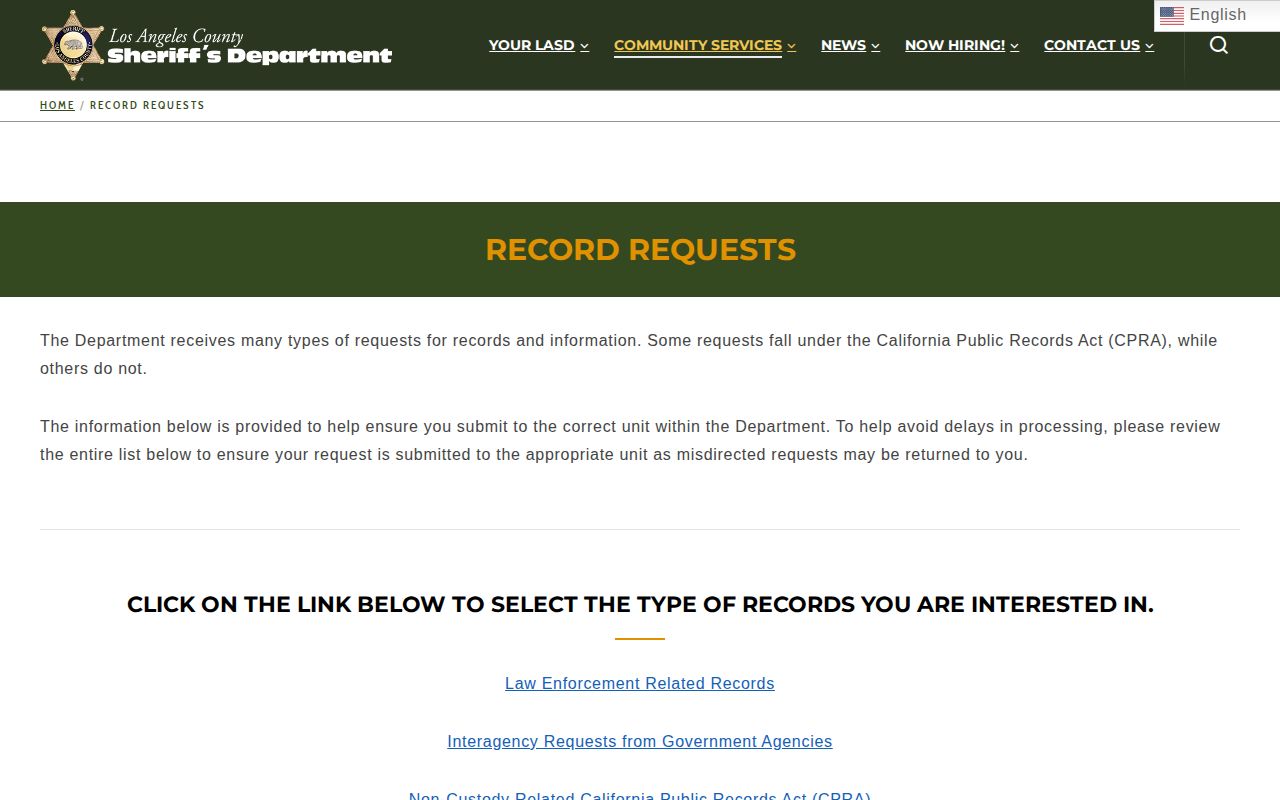
A good request is specific. Name the station and date span. Include the person's name and the record type you need. A booking number helps too.
City Arrest Reports Differ
One county does not mean one booking system. LAPD runs its own city custody facilities. It publishes no citywide daily arrest roster. Long Beach Police takes a different route with an official news and blotter archive. Those incident summaries and press releases are selective, not a booking database.
The LASD newsroom also posts selected agency releases. News stories can explain an incident or a later court development. They never replace the booking record itself. Secondary outlets like the Los Angeles Times Crime & Courts, ABC7 arrest coverage, and the Long Beach Post crime section choose what to publish, and their timing can diverge from official custody data. The LASD newsroom page shows that gap between selective news and a queryable log.

A newsroom item can add useful context. Silence there proves nothing either way. An arrest can happen with no press release at all. Cities and sheriff stations choose their own publishing habits.
Los Angeles County Arrest Trends
Trend questions need a different source. The LASD Crime and Arrest Statistics page offers aggregate monthly and annual figures. Prior-month data updates on the twenty-third of each month. Those numbers describe county patterns, not people. They cannot say who was arrested in a given week, and the official LASD statistics source keeps trends and bookings clearly apart.
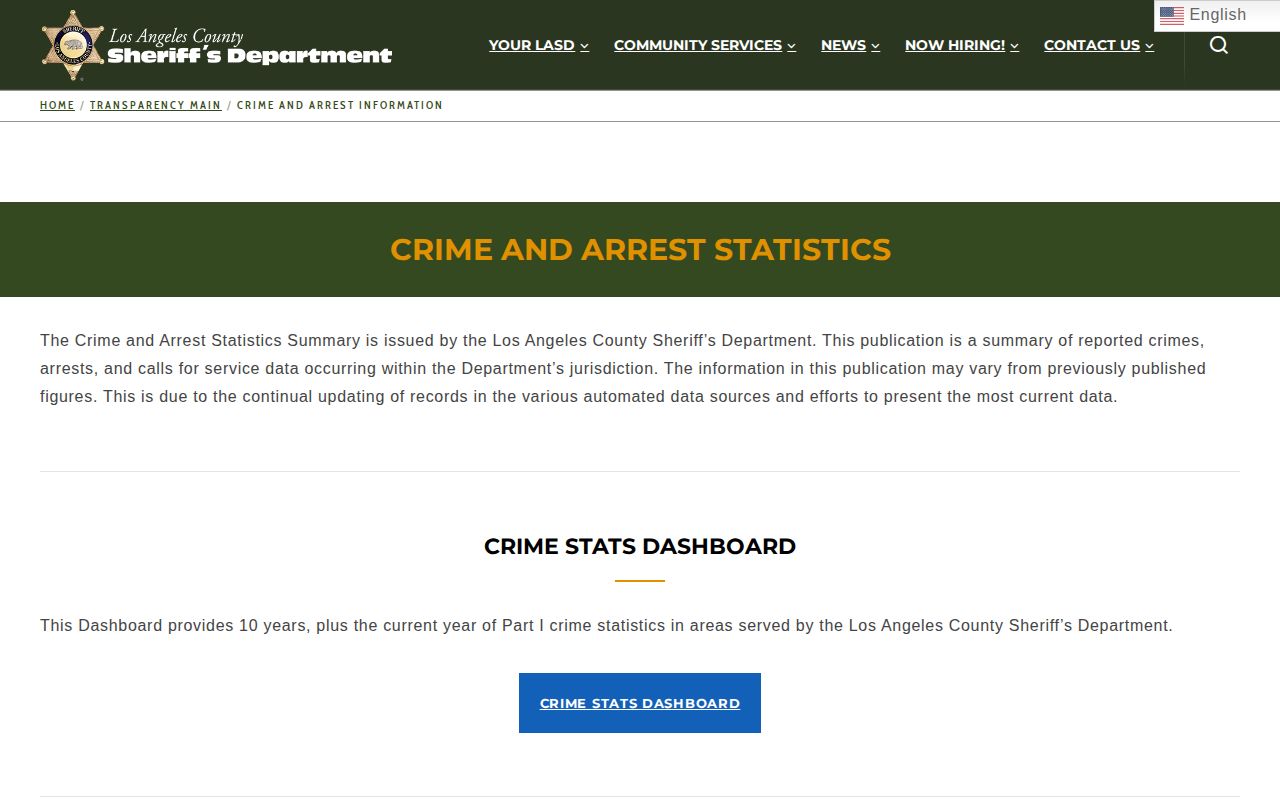
These aggregate reports sit beside the booking log. One shows people. The other shows patterns. Together they give Los Angeles County arrest data its full context.
Confirm Los Angeles County Arrest Outcomes
Booking entries only mark a starting point. Charges can shift once a case moves forward. The Los Angeles Superior Court Criminal Index updates daily and shows an indexed case and its filing location. For final outcomes, the clerk or court record is the stronger source.
Match a result with more than a name. A blank index does not prove no arrest occurred. Dig deeper. The Los Angeles County court case summary tells the fuller story of any arrest.
Public Record Search
Sponsored Results