
Los Angeles County Recent Arrest Feeds
No single database collects every Los Angeles County arrest. The Sheriff's Department runs the county jail system and offers two main tools. One is the Booking Log, which searches recent LASD bookings by station, date, and time. The other is the Inmate Information Center, called the IIC. It covers people in current county custody. Each answers a different question. A log entry marks a booking event. An IIC result shows custody at the moment of the search.
The Booking Log form handles both narrow and broad date ranges. Its date controls reach back seven rolling calendar days. Today counts as one of them. A single-date query works well for seeing who entered the system in a short stretch. Widen the dates when the arrest time or station is unclear. The form is query-driven and requires reCAPTCHA. LASD posts no fixed refresh hour. It also does not promise that every arrest in the geographic county will show up.
| Official channel | Best use | Public limit |
|---|---|---|
| LASD Booking Log | Recent station and time-range bookings | Rolling seven calendar days |
| LASD IIC roster | Current county custody and housing | New bookings may be unavailable for two hours |
| Agency record request | Older or fuller arrest and booking material | Release rules, identity checks, fees, and exemptions apply |
| Superior Court index | Case filing and later disposition path | Not a live custody or warrant tool |
The Arrested Today page walks through the same-day approach. For a wider angle, see Los Angeles County Arrest Reports. Both draw on the same sources. But they differ in timing, purpose, and how to read an empty result. The official LASD Booking Log displays the station and date controls used for either window.
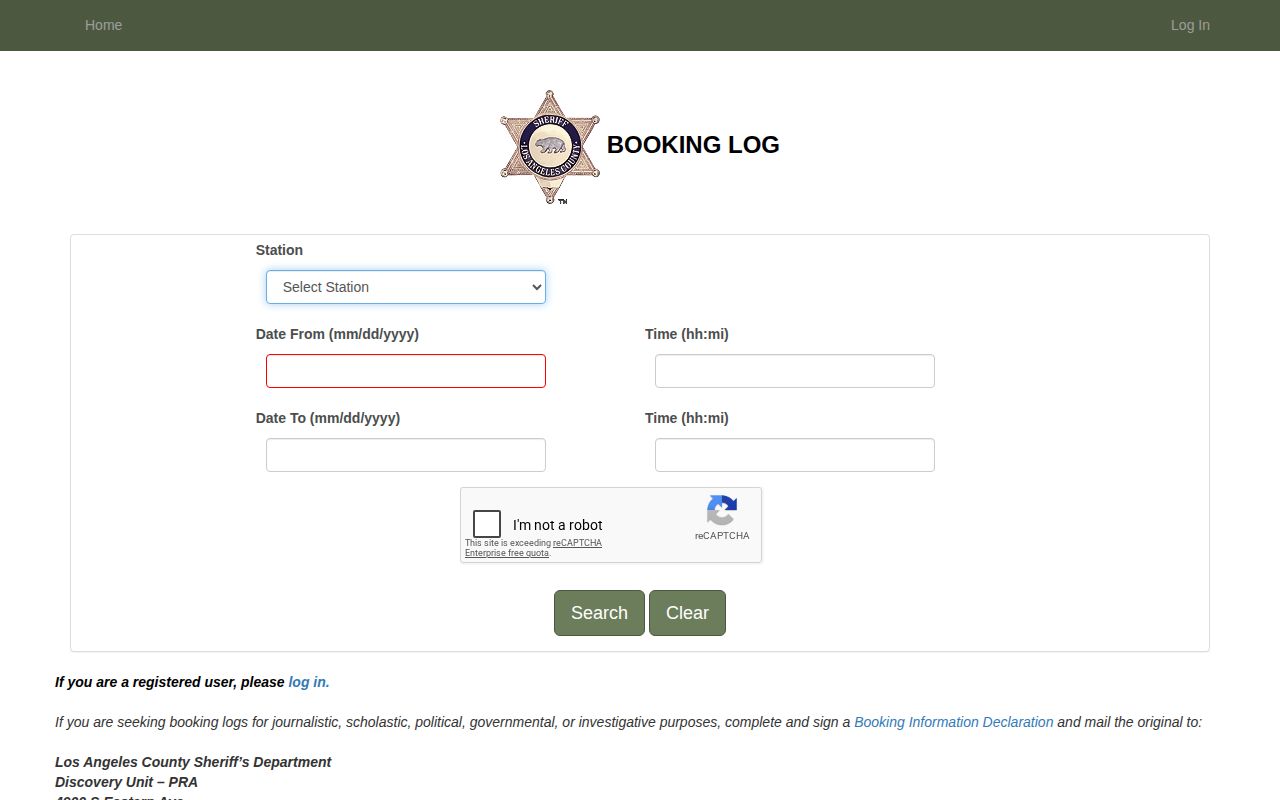
This image shows the LASD Booking Log search form itself. It displays the station and date fields a visitor fills in. No names or booking results appear in it.
When New Bookings Appear
Someone arrested last night may not be on the county roster yet. LASD issues one warning. Inmate records are unavailable for bookings from the last two hours. Treat that as a normal intake lag, not a firm posting deadline. Many things can change the path. Transport, fingerprints, and identity checks each play a part. So can medical screening, data entry, a citation release, or a city-jail hold. A person arrested by LAPD may start in a Los Angeles city jail. Long Beach arrests often go to the Long Beach City Jail. Santa Clarita bookings run through its Sheriff station. That route fits the LASD pattern more directly.
Begin with the arresting agency, then search the matching custody channel. The Booking Log covers the recent event. The IIC shows current county custody. If the booking is fresh, wait out the stated lag and check again. When county custody is already established, the VINE Arrest Check can send release or transfer notices. Keep this in mind. A no-result alone does not rule out an arrest or every hold.
Search the Los Angeles Jail Roster
For current custody, the LASD Inmate Information Center is the official roster. It asks for a last name and first name. Middle name and date of birth are optional. Either one helps separate people with common names. A reCAPTCHA must be completed before the search runs. Remember that the roster is a snapshot. Housing, bail, court dates, releases, and transfers can all change after the page loads. It is not an archive of every Los Angeles County arrest.
| Search field | Type | How to use it |
|---|---|---|
| Last name | Required | Enter the booked surname and check spelling |
| First name | Required | Use the legal first name when known |
| Middle name | Optional | Helps narrow common-name results |
| Date of birth | Optional | Use to distinguish people with similar names |
| reCAPTCHA | Required | Complete the live verification on the official site |
A careful sequence works best. First, confirm the likely custody agency. Second, enter the exact name and add the birth date if it is lawfully known. Third, compare the booking number, age or birth data, arresting agency, and current location. Do this instead of trusting a name alone. Finally, turn to the Los Angeles Superior Court when the question is the case outcome.
The IIC interface does not display booking photographs in its public results. Its job is current custody lookup, not a mugshot gallery. LASD keeps broader booking material under its own records rules. A photo held internally does not become an open web result. Released people can vanish from current custody even though an agency record still exists.
The LASD custody reports page identifies the county custody system and its inspection material.
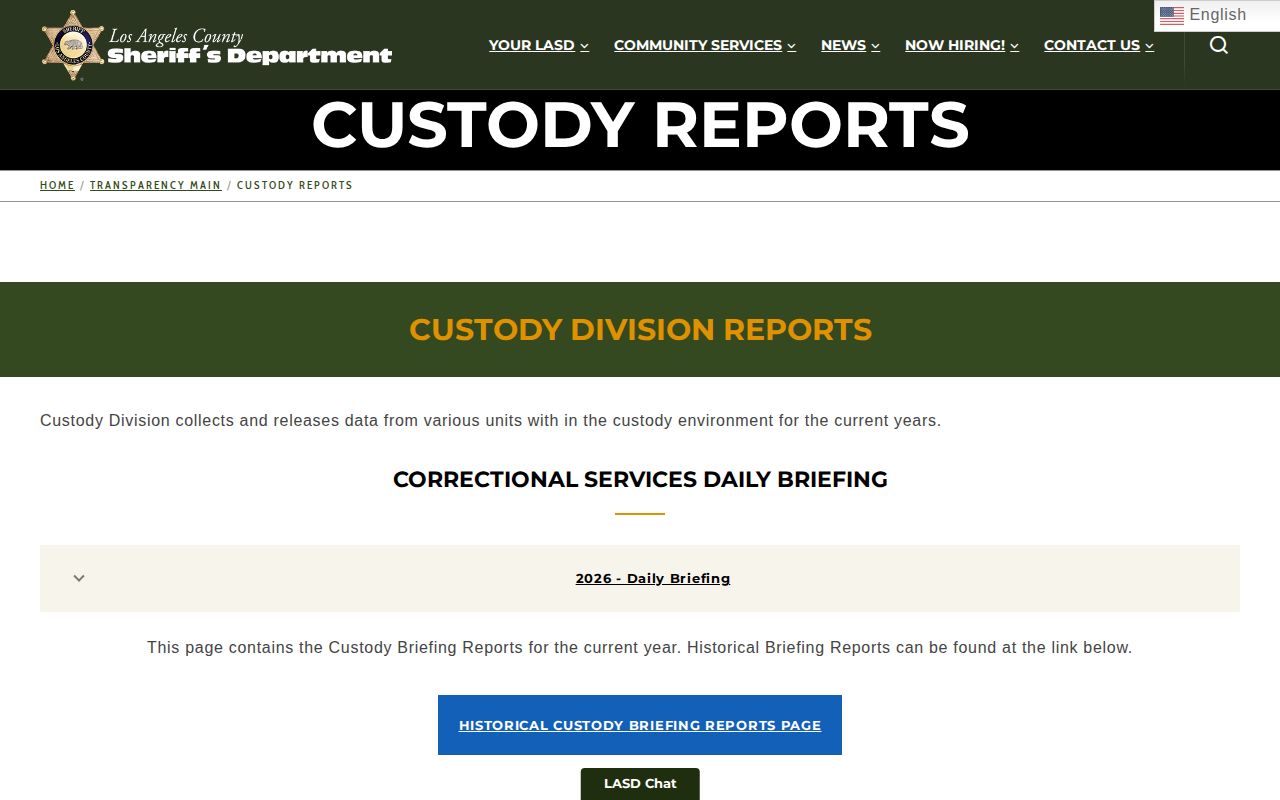
This official page provides facility context, while the IIC remains the person-specific roster.
- Booking
- The intake process that creates a custody record after an arrest or commitment.
- Roster
- A current-custody locator, not a permanent list of every arrest.
- Disposition
- The court’s later outcome, which can differ from the charge recorded at booking.
- Detainer
- A hold or request from another authority that may affect release or transfer.
Where Los Angeles Booking Records Publish
Official channels come first because they define the record and its current status. LASD supplies the county booking tools. LAPD and LBPD keep separate city records and custody paths. The official Los Angeles County Sheriff app works as a hub for inmate information, contacts, traffic updates, social accounts, and tips. Its listing describes no second booking database. Newsrooms cover only selected incidents. Unofficial arrest sites can be stale, incomplete, or wrongly matched. Treat them as leads to verify against the agency and the court.
| Channel | Official? | Photo status | What it answers |
|---|---|---|---|
| LASD IIC | Yes | Public display not established | Eligible current county custody |
| LASD Booking Log | Yes | Not established as a photo feed | Recent LASD station/time bookings |
| LAPD or LBPD | Yes | Agency release rules apply | City custody, summaries, reports, or blotter items |
| Crime and court news | No, editorial | Story-specific images | Selected incidents, not a full roster |
| Commercial arrest pages | No | May show copied or stale images | Discovery only, never current proof |
Newspapers pick their stories by news value. So the Los Angeles Times Crime & Courts section and ABC7 arrest coverage show only a slice of Los Angeles County arrests. They are not a roster. Commercial sites like Mugshots.com and RecentlyBooked are private operations too. No government stands behind them. Their dates, labels, photos, and removal state can trail the official record. An old third-party page is a poor gauge of whether anyone is in custody now.
Recent Arrests by Los Angeles County City
City lines do not decide which custody database holds a Los Angeles County arrest. The arresting agency does. So does the holding location. That is why the city pages take different routes. The Los Angeles Recent Arrests page covers LAPD's three city jails, the lack of a verified citywide daily arrest roster, and the fingerprint-based arrest-summary request. Long Beach Recent Arrests walks through the LBPD blotter. It also covers the Long Beach City Jail and the city's own report process. Santa Clarita takes a third path. The city contracts for Sheriff law enforcement. So Santa Clarita Recent Arrests follows the LASD Santa Clarita Valley Station rather than a municipal department.
These routes also explain why an empty LASD result can be inconclusive. A Los Angeles or Long Beach arrest may stay in city custody. It may also end in citation and release. Either way, no county roster hit is created. Santa Clarita's station logs cover the city plus a much wider valley. So a station-filtered result is not a city-only count. Population rankings chose these pages, not arrest volume.
Inside a Los Angeles Arrest Record
A Los Angeles booking record is built at intake. LASD's official Booking and Property Record supplies the field vocabulary. The public sees only some fields. Identity details can include legal name, aliases, and date of birth. Age, physical description, and agency identifiers can appear too. The event side is broader. Arrest and booking times, arrest location, and arresting station can all appear. So can booked charges, warrant or commitment status, bail, housing, court routing, and release. Medical and biometric data may sit in the fuller file. But that material is not public content.
| Record field | Meaning |
|---|---|
| Booking number | Identifier for the county booking event, not a court case number |
| Agency or local number | Reference used by the arresting agency |
| Arrest and book time | Separate points in the arrest-to-intake process |
| Charges as booked | Charges recorded at intake |
| Bail or holds | Custody terms that can later change |
| Photo field | An agency-held booking image subject to release policy |
| Court and housing | Routing details that may change after the record is viewed |
A booking number is not a court case number. It is not a Sheriff identification number either, nor a CDCR number. Each belongs to a different corner of the system. Use more than a name to match a record safely. Check the agency and the booking date. Also check birth details where offered, the booking number, and the court filing. A lookalike name, city, age, or face is not enough to identify a person.
Los Angeles County Arrest Photos
"Mugshot" drives plenty of searches. Yet the word says nothing about where a person is held or whether any photo is public. Booking normally includes a photograph. LASD's official form has a suspect-photo field. But the public IIC does not serve as a booking-photo gallery. There is one specific conditional route. LASD's Records FAQ allows booking photographs and related information for qualified bail bondspersons. That access runs under Penal Code section 11105.6. Everything else depends on agency policy, eligibility, safety limits, exemptions, and the facts of the record.
The 2022 LASD fee schedule listed a $16 booking-photo charge. That source carries its own date. Confirm the current amount and eligibility with Records and Identification before paying or traveling. State-prison custody follows a different track. California Department of Corrections and Rehabilitation photos go through a separate media-policy request. CIRIS itself is only a locator, not a county photo source. The LASD Record Requests page shows the official path for asking which bureau holds a record.
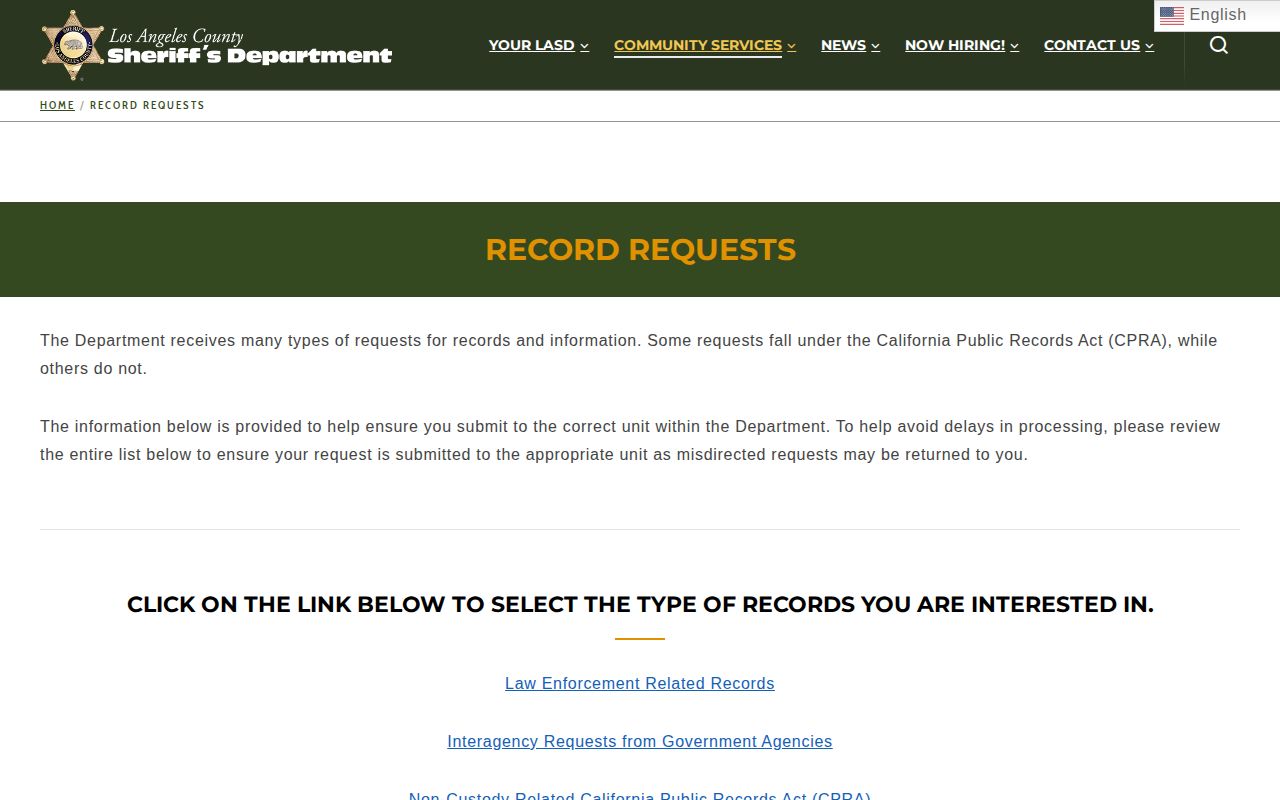
Confirm routing there rather than assuming every booking image gets released. The page names the right bureau for each record type. That step saves a wasted request. It also sets realistic expectations about photos.
Request Los Angeles Arrest Records
Who holds the record depends on who made the arrest. It also depends on where the person was booked. LASD Records and Identification handles law-enforcement records and steers custody Public Records Act matters. LAPD offers a fingerprint-based arrest-summary process for its own arrests. LBPD routes requests through Information Management. Asking the wrong agency slows everything down. Settle the agency, event date, booking or case number, and exact record sought before filing.
- Confirm whether LASD, LAPD, LBPD, another city department, or a federal agency made the arrest.
- Gather the exact name, event date, station or location, booking number, and agency case number that are already known.
- Use the holding agency’s official request form and describe an identifiable existing record. Do not ask the office to create or reconcile a new report.
- Check current identity, eligibility, appointment, fee, and delivery rules. Some material can be withheld for safety, privacy, investigation, or other law.
- Use the Superior Court case route for filed charges and disposition because a booking file may not show the final outcome.
LASD headquarters sits at 211 W. Temple Street, Los Angeles, CA 90012, reachable at (213) 229-1700. Records and Identification Bureau Public Services lists (562) 345-4441. Records questions list (562) 345-4426. Official pages disagree on the Norwalk suite and the closing hour, so call before visiting and follow the current instructions on the agency page. Older booking-log ranges may run through the Discovery Unit PRA route at 4900 S. Eastern Avenue, Suite 210, Commerce, CA 90040.
For cleanup of a search result, start at the source. Give the exact URL, the factual error, the booking or case number, and any sealing order or agency correction. Once the source changes or removes a page, Google's outdated-content guidance explains how to request a refreshed result. A search engine cannot touch the government record itself.
One more protection matters here. California Civil Code section 1798.91.1 bars a booking-photo publisher from soliciting, requiring, or accepting payment to remove or modify a photo. Use the free correction or opt-out routes the source or publisher offers. Skip any paid removal pitch entirely. Relief such as sealing can change public access, though it cannot promise that every copy made elsewhere vanishes at once.
Los Angeles Booking Record Retention
Nothing public lasts forever in a Los Angeles County arrest search. LASD keeps its Booking Log capped at the rolling last seven calendar days. The Inmate Information Center is narrower. It shows a person only while the booking record still qualifies for the current-custody view. Neither tool is an archive. Behind the scenes, Records and Identification handles retention, archival, and release. Its scope covers crime reports and booking jackets inside the Sheriff's Electronic Criminal Documents Archive. County schedules keep record series alive past the public windows. A retention schedule alone does not open every retained item to every requester.
California also offers ways to clear an arrest record. The California Courts arrest-without-conviction instructions cover relief under Penal Code section 851.91, automatic sealing concepts under 851.93, and the CR-409 petition with its CR-410 order. LASD lists its own Sealing Section. The California Attorney General's sealing information notes one caveat. A state summary may still carry a notation that relief was granted. Eligibility and deadlines turn on the case. Sealing narrows access. It cannot pull back every copy another publisher or search engine already made.
California Booking Photo Law
Booking photos in California sit inside a detailed statutory frame. The Public Records Act begins at Government Code section 7920. Government Code section 7923.610 lists arrest details an agency may disclose. Examples include name, physical description, arrest and booking time, location, factual circumstances, bail, holding or release location, and charges. Exemptions and other law still gate any disclosure. The statute also sets limits. No agency must create a record or merge separate systems. Confidential, investigative, juvenile, medical, and safety-sensitive material stays protected.
Penal Code section 13665 covers social-media sharing. It bars law enforcement from posting qualifying nonviolent booking photos there. Exceptions cover fugitives, imminent threats, court orders, and exigent need. An allowed post must come down within 14 days once it is no longer needed. Ongoing exceptions can stretch that deadline. A department website or data system falls outside the statute's social-media definition. Still, nothing obligates LASD to publish every booking photo.
Los Angeles Arrest Warrants and Wanted Notices
LASD publishes no countywide warrant-results portal. Its Records FAQ sends anyone seeking a warrant check to a local police department or Sheriff station. The Los Angeles Superior Court Criminal Index can help locate a related case. It is not live warrant clearance. A bench-warrant entry can also change. The court of record, the right agency, or an attorney settles the question.
There is no fixed LASD most-wanted list with a steady count or update schedule either. LA Crime Stoppers Wanted is the regional partner resource. That list mixes wanted, crime, and missing-person posts. Its contents shift often. An old screenshot never proves current status.
The official partner page shows how wanted notices and tip routing are presented.
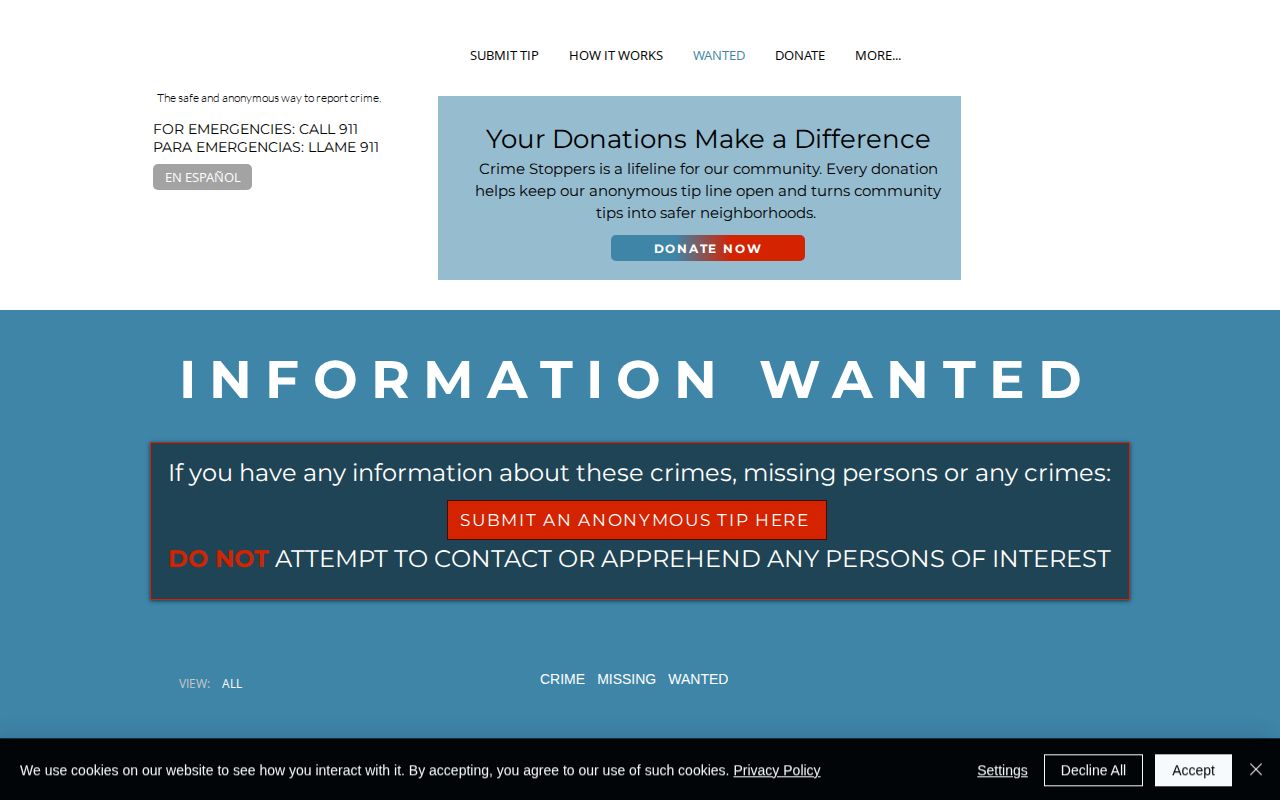
Never approach anyone shown in a wanted notice. Call 911 for an emergency. For non-emergency tips, use the official Crime Stoppers channel. Your safety matters more than any arrest question.
After a Los Angeles County Arrest
Booking opens a record. It does not close one. After a Los Angeles County arrest, the path can run through prosecutor review, arraignment, a bail or release decision, hearings, diversion, dismissal, plea, trial, judgment, or appeal. Arraignment is the first court appearance where charges and custody issues come up. LASD describes a general second-court-day framework for timely appearance. Weekends and holidays shift that count. It is a processing rule only. Nothing in it promises that charges will be filed or that a person stays jailed until court.
The Los Angeles Superior Court Criminal Index supports defendant-name and case-number searches, and the index updates daily. Coverage spans many felony and misdemeanor filing years. Online criminal documents stay limited. Confirm the person with more than a name. Then contact the court of record for the case file and disposition.
Custody Beyond County Bookings
Each locator answers a different custody question. CDCR CIRIS finds people currently in California state-prison custody, searchable by name or CDCR number. Results can show age, location, commitment county, admission, and parole-hearing information. It is not a fresh Los Angeles County booking feed. Someone sentenced here can drop off the county roster and later surface in CIRIS. State identification-photo requests follow CDCR's separate media policy.
The Federal Bureau of Prisons locator covers federal inmates from 1982 forward by register number or name. No county-style booking-photo gallery comes with it. ICE's official detainee locator covers qualifying immigration custody. Search it with an A-number or exact biographical details. County jail, state prison, federal custody, and immigration detention are not interchangeable. A miss in one locator means little on its own. Check the right agency next.